João Taborda da Gama on psychedelics, law, and the limits of the gatekeepers
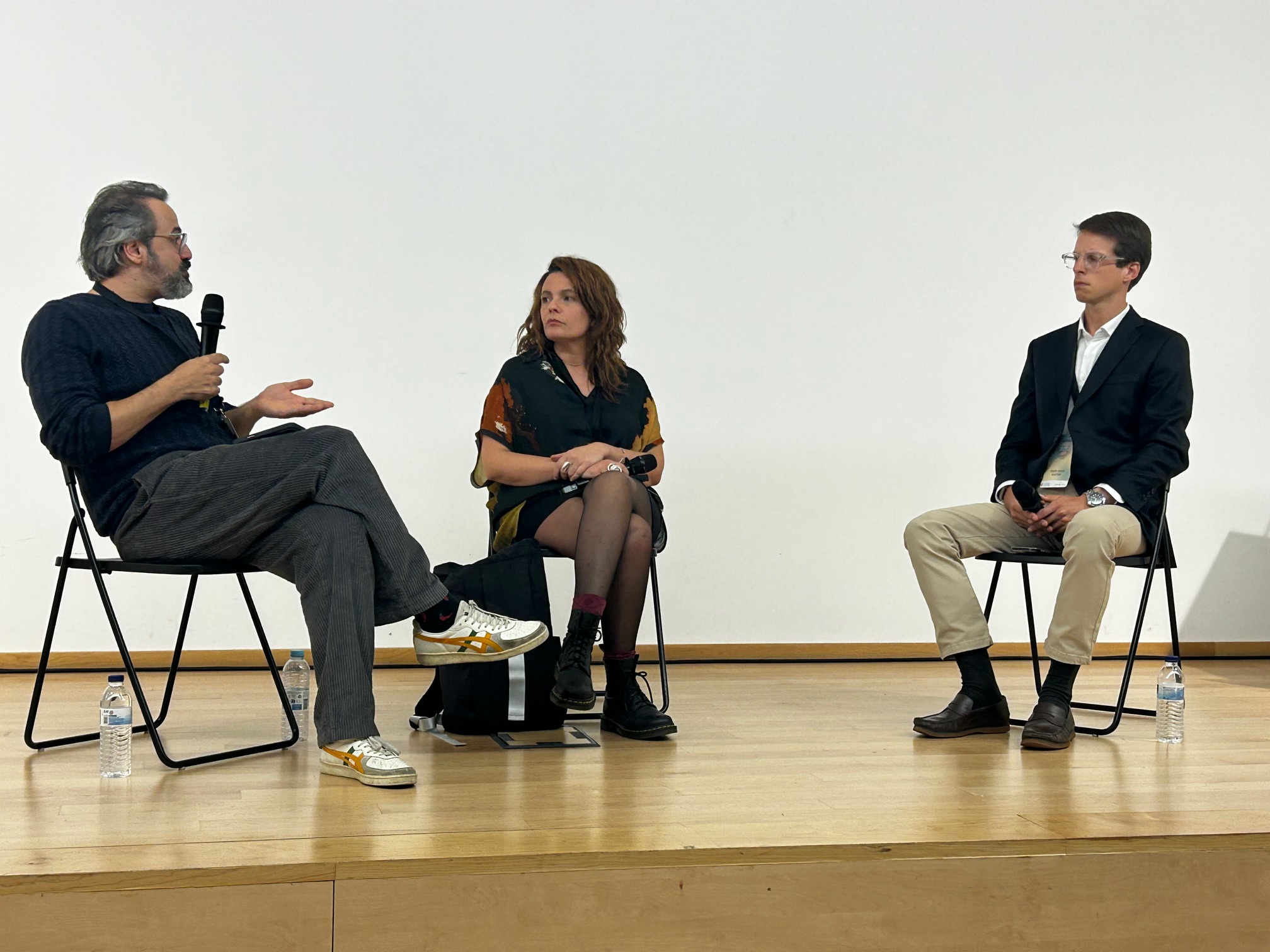
Few legal questions are as philosophically unsettled as those governing controlled substances — who may access them, under what authority, and on whose definition of wellbeing. This is one of the territories within which João Taborda da Gama is best known for his expertise, and two more recent events (beyond the Autonomy Economy forum in London last month) demonstrate how both domestic and international activists, policymakers, entrepreneurs and mental health professionals continue to look to him to make sense of where things are now, and to help map out potential futures.
On 20 March, João spoke at the webinar "Legal and Regulatory Pathways for Psychedelic-Assisted Therapies in Europe," organized by the Ukrainian Psychedelic Research Association (UPRA), Ukraine's Public Health Centre, and the Psychedelic Access and Research European Alliance (PAREA). His presentation, "Legal perspectives on psychedelic therapy and research," placed him alongside Volodymyr Kurpita, Director General of the Ukrainian Centre for Public Health; Marion Haberkamp of the German Federal Institute for Drugs and Medical Devices and the European Medicines Agency; and Pavel Pachta, former official of the United Nations Office on Drugs and Crime and former member of the International Narcotics Control Board.
Then on 10 April João participated in the inaugural medical symposium of SPACE — Sociedade Portuguesa de Aplicação Clínica de Enteógenos (Portuguese Society for the Clinical Application of Entheogens) — held at the Fundação Manuel António da Mota in Porto. Under the theme “Psychedelics in the Clinic: from Science to Experience,” the event brought together researchers, clinicians, and public health professionals to examine the scientific and clinical realities of psychedelic therapies in Portugal and Europe. João joined a roundtable discussion, "Freedom, Law and Ethics in the Use of Psychedelics,” moderated by SPACE President Pedro Sousa Martins and also featuring Helena Valente of Kosmicare.
The UPRA / PAREA event and the SPACE symposium reflect consistent domestic and international recognition of João's work at the intersection of law, public health, and the regulation of controlled substances. He continues to advise companies, NGOs and governmental bodies on who is authorized to produce, distribute, and use controlled substances, in what contexts, and to what ends. In this field, the legal questions are rarely straightforward, and the ethical ones are even less so. What distinguishes João’s contribution to these debates is his insistence upon holding the harder questions open, particularly when openness invites paradox and increases tension. He questions whether existing legal frameworks are ethically coherent, where the boundaries of individual freedom and institutional authority lie, and what it means — in law and in practice — to grant, or to withhold, autonomous access to experiences of consciousness.
These are not abstract concerns. The core questions – which drugs are we talking about here? Who can sell them? Who can use them? Where can they use them? Who can help the users? And most of all, who is it that’s asking “who?” - link directly to society’s definition and protection of wellbeing, who is granted the authority to certify and patrol it, and whether the current architecture of drug regulation reflects considered principle, confirmed biases, or accumulated habit. Medicalization is a framework for the regulation of drugs, but what risks and possibilities fall outside of that framework? Portugal's own model of decriminalization of drugs for personal use provides a useful reference point, though João approaches even familiar frameworks with the rigor of someone who knows that "better than the alternatives" does not mean "coherent” — and that the distance between the two is precisely where legal and ethical work remains to be done.
At the SPACE symposium, João spoke among leading figures in clinical practice, research, and policy, including Eduardo Schenberg (Faculty of Medicine, University of Lisbon; Petrie-Flom Center, Harvard Law School), Chris Timmermann (University College London Centre for Consciousness Research), Pedro Castro Rodrigues (Centre for Psychedelic Research, Imperial College London; NOVA Medical School), Maria João Matos Silva (Centro Hospitalar Psiquiátrico de Lisboa), Albino Oliveira-Maia (Champalimaud Foundation; NOVA Medical School), João da Fonseca and Ana Cruz (Liminal Minds), Pedro Zuzarte (Faculty of Medicine, University of Lisbon), Maria Carmo Carvalho (Universidade Católica Portuguesa; Kosmicare), Frederico Magalhães (Centre for Psychedelic Research, Imperial College London), Pedro Teixeira (Faculty of Human Kinetics, University of Lisbon), and Tadeusz Hawrot (PAREA).
__________
João Taborda da Gama sobre psicadélicos, lei e os limites dos “gatekeepers”
Poucas questões jurídicas são tão filosoficamente abertas como as que regulam as substâncias controladas — quem pode aceder a elas, sob que autoridade, e com base em que definição de bem-estar. Este é um dos territórios em que João Taborda da Gama é reconhecido pela sua expertise, e dois eventos recentes (para além do fórum Autonomy Economy em Londres) demonstram como ativistas, decisores políticos, empresários e profissionais de saúde mental, a nível nacional e internacional, continuam a recorrer a ele para compreender o estado atual das coisas e ajudar a mapear futuros possíveis.
A 20 de março, o João participou no webinar "Legal and Regulatory Pathways for Psychedelic-Assisted Therapies in Europe," organizado pela Ukrainian Psychedelic Research Association (UPRA), pelo Serviço de Saúde Pública da Ucrânia e pela Psychedelic Access and Research European Alliance (PAREA). A sua apresentação, "Legal perspectives on psychedelic therapy and research," colocou-o ao lado de Volodymyr Kurpita, Diretor-Geral do Centro de Saúde Pública da Ucrânia; Marion Haberkamp, do Instituto Federal Alemão de Medicamentos e Dispositivos Médicos e da Agência Europeia de Medicamentos; e Pavel Pachta, ex-funcionário do Escritório das Nações Unidas sobre Drogas e Crime e ex-membro do International Narcotics Control Board.
A 10 de abril, o João participou no I Simpósio da SPACE — Sociedade Portuguesa de Aplicação Clínica de Enteógenos — realizado na Fundação Manuel António da Mota, no Porto. Sob o mote Psicadélicos na Clínica: da Ciência à Experiência, o evento reuniu investigadores, clínicos e profissionais de saúde pública para examinar a realidade científica e clínica das terapias com psicadélicos em Portugal e na Europa. O João integrou uma mesa-redonda, Liberdade, Lei e Ética no uso de psicadélicos, moderada pelo Presidente da SPACE, Pedro Sousa Martins, que contou igualmente com a participação de Helena Valente, da Kosmicare.
O evento da UPRA/PAREA e o Simpósio da SPACE refletem o reconhecimento consistente, a nível nacional e internacional, do trabalho do João na intersecção do direito, da saúde pública e da regulação de substâncias controladas. O João continua a assessorar empresas, organizações não-governamentais e organismos governamentais sobre quem está autorizado a produzir, distribuir e utilizar substâncias controladas, em que contextos e com que fins. Neste domínio, as questões jurídicas raramente são simples, e as éticas ainda menos. O que distingue o contributo do João nestes debates é a sua insistência em manter as questões mais difíceis em aberto, especialmente quando essa abertura convida ao paradoxo e amplifica a tensão. Ele questiona se os quadros jurídicos existentes são eticamente coerentes, onde se situam os limites entre a liberdade individual e a autoridade institucional, e o que significa — em direito e na prática — conceder, ou recusar, o acesso autónomo a experiências de consciência.
Estas preocupações não são abstratas. As questões centrais — de que drogas estamos a falar? Quem as pode vender? Quem as pode usar? Onde as pode usar? Quem pode ajudar os utilizadores? E, acima de tudo, quem é que está a perguntar "quem"? — ligam-se diretamente à forma como a sociedade define e protege o bem-estar, a quem é conferida a autoridade para o certificar e vigiar, e se a arquitetura atual da regulação de drogas reflete princípios ponderados, preconceitos consolidados ou simplesmente o peso acumulado do hábito. A medicalização é um quadro de regulação das drogas — mas que riscos e possibilidades ficam fora desse quadro? O modelo português de descriminalização do consumo de drogas constitui um ponto de referência útil, mas o João aproxima-se dos quadros mais familiares com o rigor de quem sabe que "melhor do que as alternativas" não significa "coerente" — e que a distância entre os dois é precisamente onde o trabalho jurídico e ético ainda está por fazer.
No Simpósio da SPACE, o João juntou-se a figuras de referência na prática clínica, na investigação e nas políticas públicas, incluindo Eduardo Schenberg (Faculdade de Medicina da Universidade de Lisboa; Petrie-Flom Center, Harvard Law School), Chris Timmermann (UCL Centre for Consciousness Research), Pedro Castro Rodrigues (Centre for Psychedelic Research, Imperial College London; NOVA Medical School), Maria João Matos Silva (Centro Hospitalar Psiquiátrico de Lisboa), Albino Oliveira-Maia (Fundação Champalimaud; NOVA Medical School), João da Fonseca (Liminal Minds), Pedro Zuzarte (Faculdade de Medicina da Universidade de Lisboa), Maria Carmo Carvalho (Universidade Católica Portuguesa; Kosmicare), Frederico Magalhães (Centre for Psychedelic Research, Imperial College London), Pedro Teixeira (Faculdade de Motricidade Humana da Universidade de Lisboa) e Tadeusz Hawrot (PAREA).